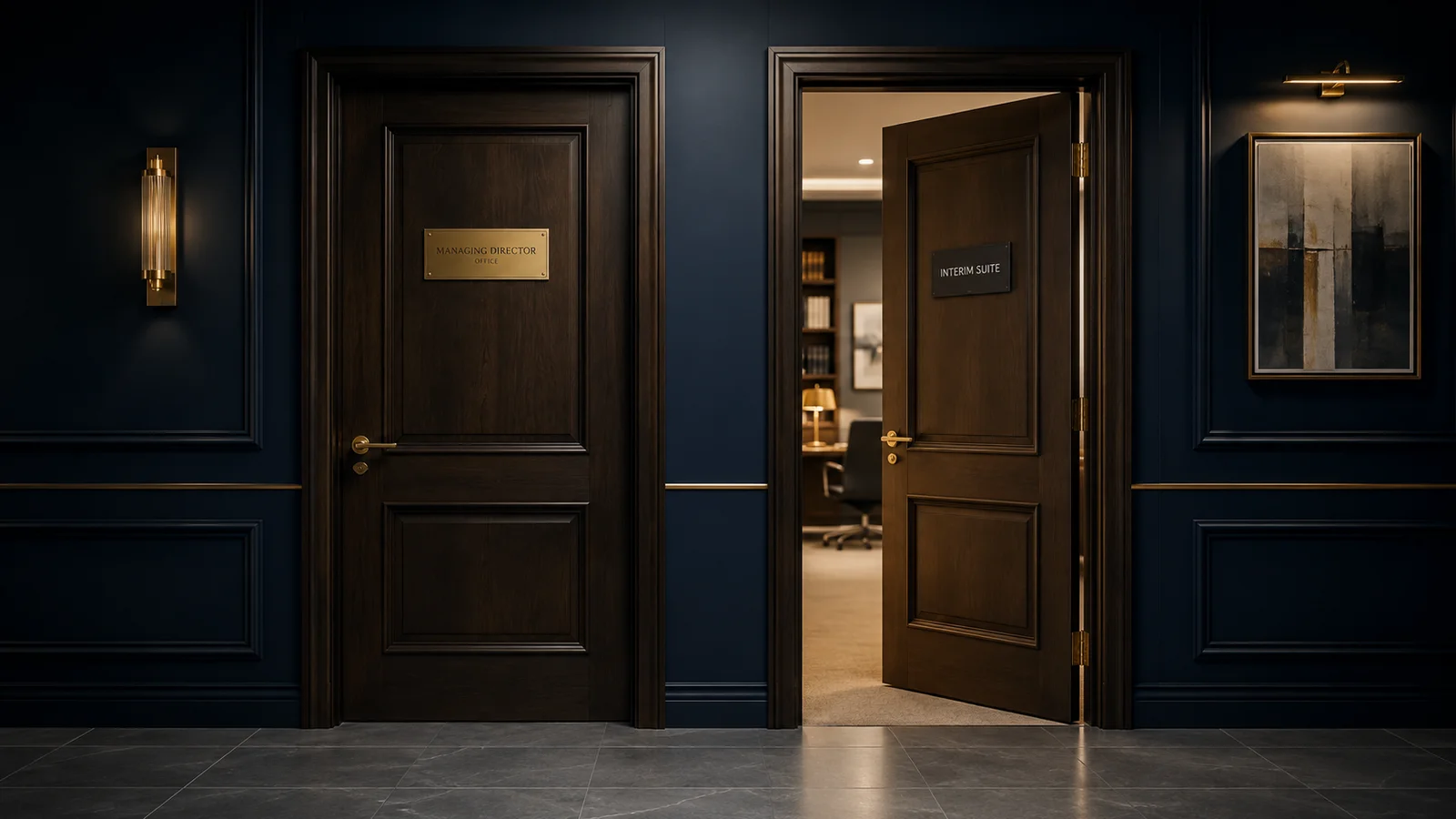


Ask a chairman why the search he launched in March has gone quiet, and you will rarely get a straight answer about you. The June Report on Jobs from KPMG and the REC put it plainly: permanent placements fell at their quickest pace in ten months during May, and the firms behind the survey pointed at the war in Iran and a turbulent stretch of UK politics. The hesitation sits with the people who sign the offers, and it is being driven by events well outside any candidate’s control.
When the news gets loud, the boardroom goes quiet
There is a pattern to this, and it has very little to do with talent. When the outlook clouds over, the perceived cost of a wrong senior hire climbs, and the easiest decision in the building becomes the one to wait. A chief executive watching the oil price jump and an unsettled Budget season will hold the most discretionary line on the page, and a brand new director role is often exactly that. The ONS heard the same thing from employers this month: some firms told its June vacancy survey they were holding back because of economic uncertainty and rising labour costs. None of that is a verdict on the shortlist.
The numbers behind the pause
The scale is worth seeing clearly. UK vacancies slipped to around 707,000 in the three months to May, the lowest level since the early months of 2021. There are now 2.5 unemployed people for every vacancy, a ratio that has held since last autumn. The sharpest volume fall came in professional, scientific, and technical activities, down by 8,000 vacancies, which happens to be the very corner of the economy where a great many senior mandates sit. So this squeeze reaches well beyond the shop floor. It has arrived in the corner office.
A freeze you did not cause still costs you
Here is where good executives trip. A process that stalls reads, from the inside, like a judgement. You start to wonder what you said in the second interview, whether the headhunter has cooled, what the panel really thought. The honest answer is usually that a macro event you had no part in has frozen the decision above your head. The danger sits in how you respond to that silence. Candidates go quiet to match it, they stop tending the network, they let the CV drift out of date, and three months evaporate. I wrote recently about why senior hiring stays selective, and where the interim market has absorbed the demand; both still hold, and this month’s data only sharpens the point.
How to stay ready while the freeze holds
The leaders who come out of these spells in front treat the lull as preparation. A few things are worth doing now, while the pressure is off. Get your story straight on paper, because a freeze ends without warning and the first call goes to whoever is ready: a sharp, current executive CV and, for the most senior briefs, a C-suite document pitched at board level, above the HR filter. Tend your LinkedIn profile, since search consultants and their tools read it long before anyone phones. Widen the aperture to interim and portfolio work, which is where a good deal of senior activity has gone this year. And if redundancy is part of your story, structured career transition support protects the momentum that silence tends to drain.
Frequently asked questions
Is this a bad time to look for a senior role?
Fewer roles are live, and the ones that are tend to be filled with care. That favours a prepared, well-positioned candidate. The work you do now to sharpen your positioning pays off the moment confidence returns, and it always returns.
Should I take an interim role while permanent hiring is frozen?
For many senior people this year, yes. Interim and day-rate work has held up while permanent placements have fallen, it keeps you visible and earning, and a strong interim delivery has a habit of converting into a permanent offer once the board’s nerve steadies.
How long do hiring freezes driven by external shocks last?
There is no fixed clock, though shocks of this kind tend to ease over a quarter or two as markets price the new reality. The error is to treat a pause as permanent and disappear from view.
A live process suddenly went silent. What should I do?
Keep it warm without crowding. A brief, useful note to your contact, with no pressure attached, keeps you present. Then carry on running other lines. Assume the delay is about their world, and behave as though the role is still yours to win.
Markets freeze and markets thaw, and the executives who win the next round are the ones who used the cold spell well. A war in the Gulf and a noisy month in Westminster can sit on your offer for a while. They cannot sit on it forever. Keep your positioning current, keep your network warm, and be the name that is ready when the boardroom finds its nerve again. If you want that groundwork handled properly, a career advisory retainer keeps a steady hand on it through the quiet months.